“Success in an exam depends on strategy, not on intelligence”.
Have you ever started your revision thinking, “What if none of this comes up?” if so, then you are not alone. Many students spend hours revising, rereading books, highlighting notes, and watching revision videos, but still walk into the exam hall feeling unsure. So what makes a difference between students who revise hard and students who revise smart?
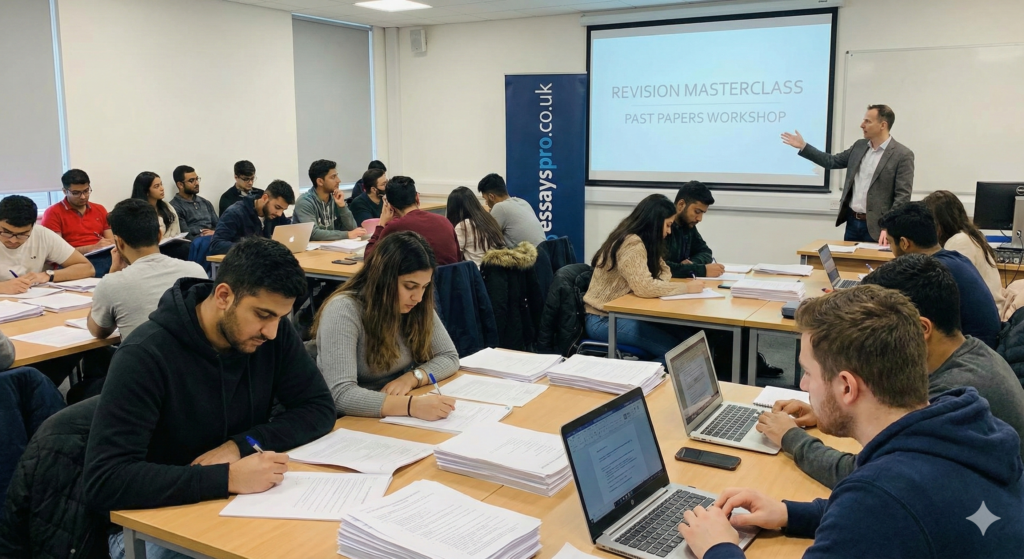
It is simple because it is not about how much you revise; it is about how you revise. Among all the “exam revision techniques”, there is one single technique that boosts your grades, which is the use of past papers effectively. Instead of searching for exam revision techniques, go for “how to use past papers?” strategically, like an examiner. This revision master class will show you how you can use past papers as weapons to improve your exam performance.
You know what is the most uncomfortable thing during exams?
The most hardworking students underperform in exams. Most of the students think that why they do not score well in exams although they work hard. The answer is simple, exams do not reward effort, they reward the technique you used for exams, due to which students perform well in exams. And if you really want to improve your grades in exam then the simple technique is to use is the use of past papers. Here, the question arises, why do the past papers hold this much importance?
The past papers reveal how questions are phrased, how many times the question is repeated, how marks are divided per question, what examiners expect in a question, and most importantly, they train you in the way the exam demands from you.
Students believe they are revising well because they reread notes, highlight important points, and watch revision videos. Without past papers, you may know the content, but you do not know how to apply or use that content in your exams. That is why mastering the use of past papers is essential, not optional.
MISTAKE STUDENTS MAKE WITH PAST PAPERS
Although students do not use past papers, but those who use past papers make mistakes, which they cannot improve or score well in exams. They save past papers for the last few weeks; they check answers immediately, and move on without reflection. Do not use past papers for tests, but use them as a training tool for your exams.
Past papers are not for glancing through or checking marks scheme, but they are used for analyzing, practicing, and mastering them.
ANALYSING PAST PAPERS
When you use past papers, do not simply answer the questions and think that you have used past papers strategically. Take 5-6 past papers and look for the most repeated questions. Are there any patterns in wording? Which topic is most frequently used? Which type of topic or question is worth for marks?
Exams will be predictable when you analyse the past papers because the patterns are repeated. After analysing, create a table or make a list in which you mention each topic according to its frequency, marks allocated, and common words such as evaluate, explain, compare, describe, etc.
REVISE HIGH-VALUE TOPIC
Instead of paying attention to all topics equally, focus on the questions or topics that carry more marks. This technique will be helpful when time is limited. Prioritize the topics that actually matter, you will find these topics easily in past papers through the number of times they are repeated.
ACTIVE RECALL
The active recall study method is effective because the brain learns best when it struggles to retrieve information. There are a few steps to apply this method while using past papers.
- Attempt the question before revising the topic.
- Write it from your memory so that you can know how much you know about the topic.
- Check the mark schemes after completing the question.
- Identify your mistakes as well as the gaps.
This will help you boost your memory because while attempting your paper, you will know which part of the question you can write in detail and which cannot be discussed deeply according to the division of marks.
PRACTICE UNDER TIME PRESSURE
Time pressure changes everything: your handwriting, your ability to structure your answers, your stress level, and even your thinking speed. So, if you really want to master the technique of using past papers for your exams, you should practice under time pressure, as it is also one of the effective methods for preparation of the exams. You do not need to attempt all questions in past papers. Start from the questions that hold fewer marks, and attempt those questions under strict timing. Knowing the answer is another thing, delivering those answers under time pressure is another thing. Many students ignore timed practice, but the time practice improves your speed, structure, focus, and also manage your stress during exams.
MARK SCHEMES AS GOLDMINES
Mark schemes are goldmines once you know how to use them. Do not just check whether your answer is right or wrong, but identify where marks are lost while attempting a question, highlight important phrases, and notice how the question should be structured. When you check these points, you will come to know that marks are not awarded when you write lengthy answers and fancy vocabulary; these would not matter if the structure of the answer is not organized. Accuracy matters more than waffle.
PAST PAPERS AS WEEKLY ROUTINE
Past papers should not be the last minute tool for revision, but you should add past papers to your revision timetable from the very beginning. Make past papers a habit in your weekly routine. You can revise past papers through a simple structure.
- At the beginning of the week, analyse the questions and revise the topics that are weak for you.
- In the middle of the week, attempt past paper questions.
- At the end of the week, use “the time practice method”.
This will keep you motivated and well prepared for exams.
TRACK YOUR PROGRESS
Track your progress; it does not mean how much perfection you have gained from the past papers, but it is how much you have improved. So, progress is not about perfection, but it is about improvement. After going through each past paper, identify the topics that are still weak and focus on challenging areas.
IMPORTANCE OF PAST PAPERS
Past papers are a very important tool for preparation of your exams. Past papers hold such importance because it helps in predicting exams question, it builds confidence, and it tells you the weak areas on which you need to focus. This is why top-performing students rely on past papers.
CONCLUSION
Exams are near, so do not get stressed because now you know that you do not need to revise more, but you need to revise better. Every time you analyse the past paper, attempt a timed question, and learn from your mistakes, each time you are stepping towards success. It boosts your confidence level, so when you enter in the examination hall, you are fully convinced without any doubt because you have prepared for exams strategically and revised through past papers. There are many techniques for the preparation of the exams, but the technique of using “past papers” beat the other techniques because none of them matches the power of mastering the use of past paper. The past papers mirror real exams and build your true confidence.
Start using past papers wisely, your future self will thank you for this! Best of luck with your coming exams!
Written by: Ansa Ishtiaq